
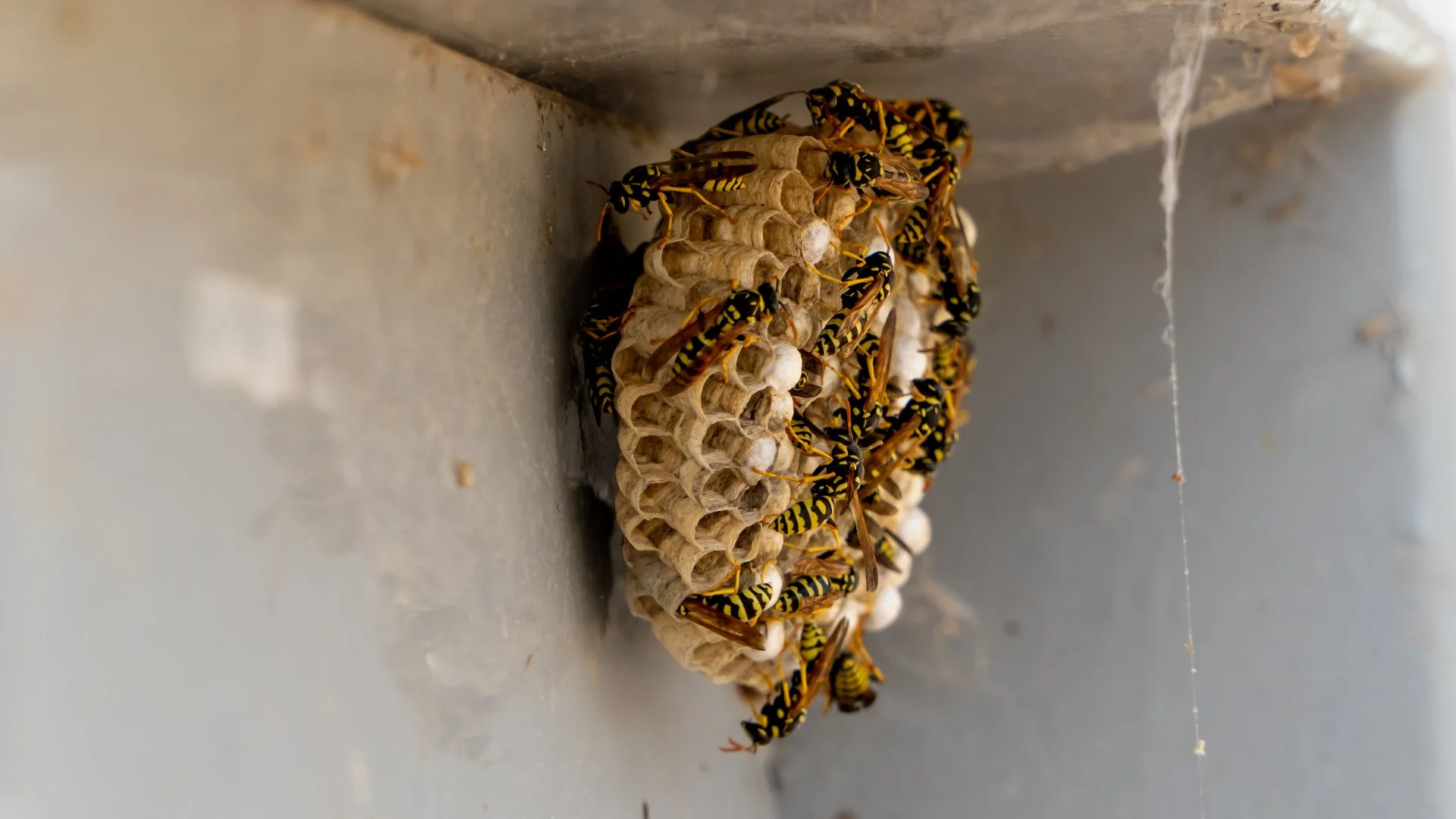
Wasps and hornets are two common stinging insects that can be a nuisance on your property in Maryland. While they may look similar, there are some key differences between the two. Wasps, belonging to the Hymenoptera order, have slender bodies, narrow waists, and can sting multiple times. They range from 1/2 to 1 inch in size, with nests built from chewed wood fibers. Hornets are a larger subset of wasps and are usually more aggressive, often nesting higher up, like in trees. Their stings are more painful due to their size and venom potency. If you encounter wasps or hornets, it’s best to avoid removal on your own due to the risk of aggression. Instead, contact professionals for safe removal and prevention advice.
What are wasps?
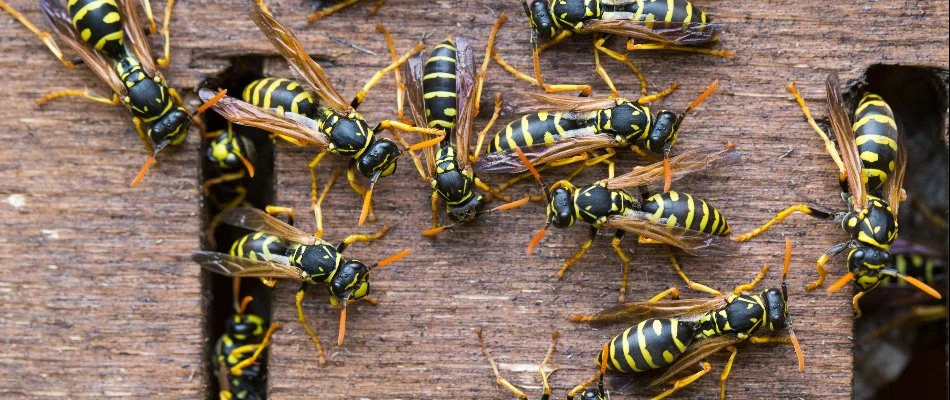
Wasps are a type of insect that belongs to the order Hymenoptera, which also includes bees and ants. There are many different species of wasps, but they all have a few things in common. Wasps have slender bodies with narrow waists and long legs. They have two pairs of wings and a stinger that they use to defend themselves or capture prey.
Wasps can vary in size depending on the species, but most are between 1/2 and 1 inch long. They are typically yellow and black or brown and black in color. Wasps are known for their aggressive behavior and will sting if they feel threatened. They can sting multiple times, and their stings can be painful and cause allergic reactions in some people.
Wasps build their nests in a variety of locations, including trees, bushes, and under eaves or decks. They construct their nests out of paper-like material that they make by chewing wood fibers and mixing them with saliva. Wasps are most active during the summer months, and their populations can grow quickly.
What are hornets?
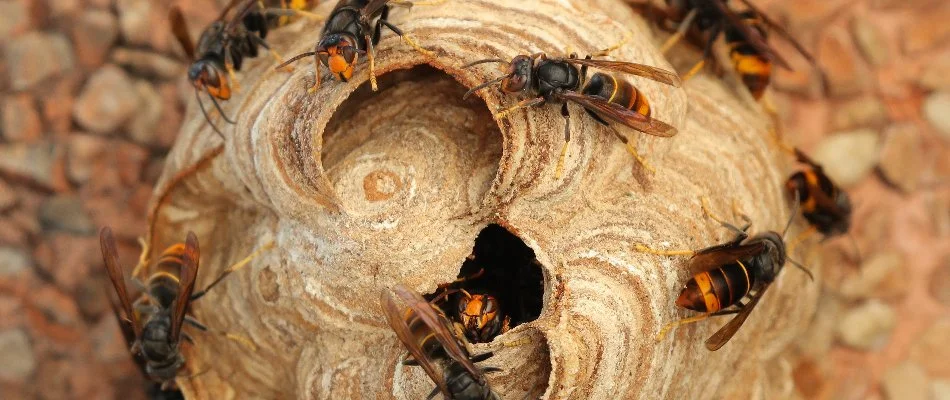
Hornets are a subset of wasps, usually larger and more robust. The common European hornet, for instance, can be up to 1.5 inches long. They have a stout body compared to wasps and are generally less brightly colored, often marked with brown and yellow or black and white stripes.
Hornets tend to be more aggressive than wasps, particularly when defending their nests. Their sting can be more painful due to their size and venom potency. Unlike wasps, hornets often build their nests in hidden, higher locations like tree branches or the rafters of buildings. These nests can be quite large and are also made from chewed wood and saliva, giving them a similar papery appearance. However, hornet nests are usually more enclosed than wasp nests.
What should you do if you notice wasps or hornets on your property?
If you spot wasps or hornets on your property, it’s essential to handle the situation carefully. These insects can become aggressive if they perceive a threat to their nest. Therefore, attempting to remove or destroy the nest yourself can be dangerous. The best course of action is to contact professional pest control services.
Experts have the knowledge and equipment necessary to safely remove nests and deal with these pests effectively. They can identify the species, assess the level of risk, and choose the most appropriate method to resolve the infestation. Professionals can also provide advice on preventive measures to avoid future infestations, such as sealing entry points in your home, maintaining clean outdoor spaces, and using deterrents wisely.
Give us a call today to sign up for our stinging insect control service!
Wasps and hornets are two common stinging insects that can be a nuisance on your property. If you notice them on your property, we are here to help eliminate them. Our team at Liqua-Grow Turf offers a stinging insect control service to commercial and residential properties, as well as HOAs, in Westminster, Eldersburg, Ellicott City, and nearby areas in Maryland and Pennsylvania.
This service eliminates stinging insects by applying a powerful insecticide dust on their nests and entrances. After 48 hours, our team will return to inspect the nests and remove them if possible. We will also vacuum any remaining adult wasps or hornets. Sign up for this service today by calling us at (410) 795-7900!

Comments (0)
Thanks for your comment!
Thanks for your feedback! Your comments have been successfully submitted! Please note, all comments require admin approval prior to display.
Error submitting comment!
There is a problem with your comment, please see below and try again.